top of page
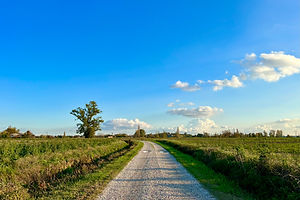
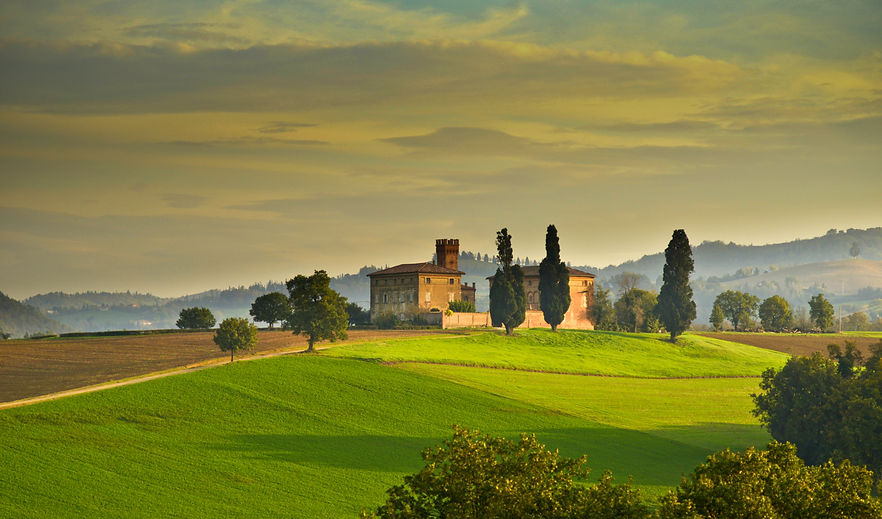
stefano-zocca-Emilia-Romagna.jpg

EMILIA-ROMAGNA

Where Italy Comes to Eat

Ragù, Parmigiano, balsamic, and Ferrari — the region that invented the good life and never stopped refining it.

There is an argument — made quietly, by people who have eaten well across this country — that Emilia-Romagna is the most important region in Italy. Not the most beautiful. Not the most cinematic. But the most important, in the way that foundations are important: you build everything else on top of them.


This is where Parmigiano-Reggiano ages in mountain air, where balsamic vinegar darkens in wooden barrels for decades, where Enzo Ferrari was born and where his cars are still built. The Via Emilia — the Roman road that cuts the region in a straight line from Piacenza to Rimini — is one of the great organizing principles of Italian geography. Everything worth knowing exists within a short drive of it.


Don't come looking for Tuscany. Come looking for something older, richer, and considerably better fed.

WHEN TO COME

April through June, and September through October. Summer in the Po Valley is hot and humid. Autumn is the right season — harvest tables, porcini from the Apennines, and Parmigiano production in full swing.

HOW TO MOVE

By train between the cities — Bologna is forty minutes from Florence on the high-speed line, two hours from Milan. By car everywhere else. The Apennine roads south of the Via Emilia are among the most rewarding drives in northern Italy.

WHO IT'S FOR

Travelers who eat seriously. Those who want to understand where Italian food actually comes from. Anyone willing to trade the view for the table.

EXPLORE EMILIA-ROMAGNA

Choose Your Corner

sterling-lanier-Bologna.jpg

Bologna

The oldest university in the Western world, 38 kilometres of UNESCO porticoes, and a food culture so formidable it earned the city a nickname. La Grassa — the Fat One — is not an insult here. It is a civic identity.

alessandro-crespina-Modena.jpg

Modena

Ferrari, Lamborghini, Massimo Bottura, and the finest balsamic vinegar in the world. A small city carrying an extraordinary amount of excellence without appearing to try.

kateryna-kamenieva-Parma.jpg

Parma & the Food Valley

Prosciutto, culatello, Parmigiano-Reggiano — the holy trinity of the Italian larder, all produced within reach of a city that also happens to have a Correggio, a Farnese theatre, and a serious opera culture.

simone-trivisonne-Rimini.jpg

Rimini & the Riviera

Where Fellini was born and where the Adriatic coast opens up. The Malatesta Temple is a Renaissance monument of serious ambition. The beach is everything else.

adrian-negura-Ravenna.jpg

Ravena

The city that outlasted an empire — Byzantine gold, Dante's tomb, and mosaics that have never once faded in fifteen centuries.

stefano-marinelli-Po_Delta.jpg

Ferrara & the Po Delta

A Renaissance city built by the Este dukes, with wide streets, a moated castle, and city walls that are now a cycling path. East of it, the Po Delta spreads into marshland and sky — quiet, flat, and unlike anywhere else in Italy.

mountainarious-Apennines.jpg

Romagna Apennines

Chestnut forests, medieval castles, and farms where Parmigiano-Reggiano is made in the same copper cauldrons it has been made in for seven centuries. The Emilia-Romagna most visitors never find.

Emilia-Romagna does not ask you to fall in love with it.
It simply feeds you until you do.

bottom of page