
FLORENCE & FIESOLE
Where Beauty Became a Habit
Renaissance palaces, neighbourhood trattorias, and a hill town above a the city that most visitors never find.
Florence doesn't surprise you. You arrive already knowing what it looks like — the Duomo, the Ponte Vecchio, the Uffizi queue stretching into the piazza. The city has been famous for so long it has learned to wear its beauty without apology.
But Florence rewards the person who looks sideways. The neighbourhood of Oltrarno, across the river from the tourist current, moves at a different pace. The artisan workshops are still there — bookbinders, goldsmiths, furniture restorers — doing what they have done for generations with no particular interest in being discovered. The aperitivo bars fill with locals at seven. The streets narrow and darken and smell of stone.
Fiesole sits four kilometres above the city on a hill the Etruscans settled before Rome existed. From up there Florence looks like a scale model of itself, terracotta and green, impossibly compact. Come up for the view. Stay for the quiet. Understand, finally, why everyone who ever lived here found it so difficult to leave.
WHEN TO COME
March through May, and October. Summer turns Florence into a slow-moving queue. Come in spring when the wisteria is out on the Ponte Vecchio, or in autumn when the light drops low and golden and the city empties just enough.
HOW TO MOVE
On foot, always. Florence is small enough to walk end to end in thirty minutes. The mistake is trying to see too much. Pick three things a day. Take the bus up to Fiesole in the late afternoon. Walk back down if you're feeling ambitious.
WHO IT'S FOR
Anyone who has ever stood in front of a painting and felt something shift. Florence is for people who take beauty seriously — and who know that the best meal of the trip will probably be in a place with no sign outside.
WHERE TO STAY
Florence & Fiesole's Finest
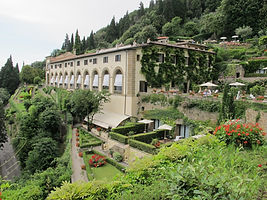
Belmond Villa San Michele
Fiesole, Florence
"Florence looks its best from a distance. Villa San Michele has known this for five hundred years."
A 15th-century Franciscan monastery on a wooded Fiesole hillside — with a facade attributed to Michelangelo, views across Florence to the Duomo, and the quiet conviction that it has no equal in the area.

Four Seasons Hotel Firenze
Florence, Tuscany
"Florence has been producing masterpieces since 1473. This building is one of them."
A 15th-century Medici palazzo with Florence's largest private garden, a Michelin-starred restaurant, and the quiet conviction that this is simply the finest hotel in the city.

